Tobit's Dog: The Only Pet in the Bible
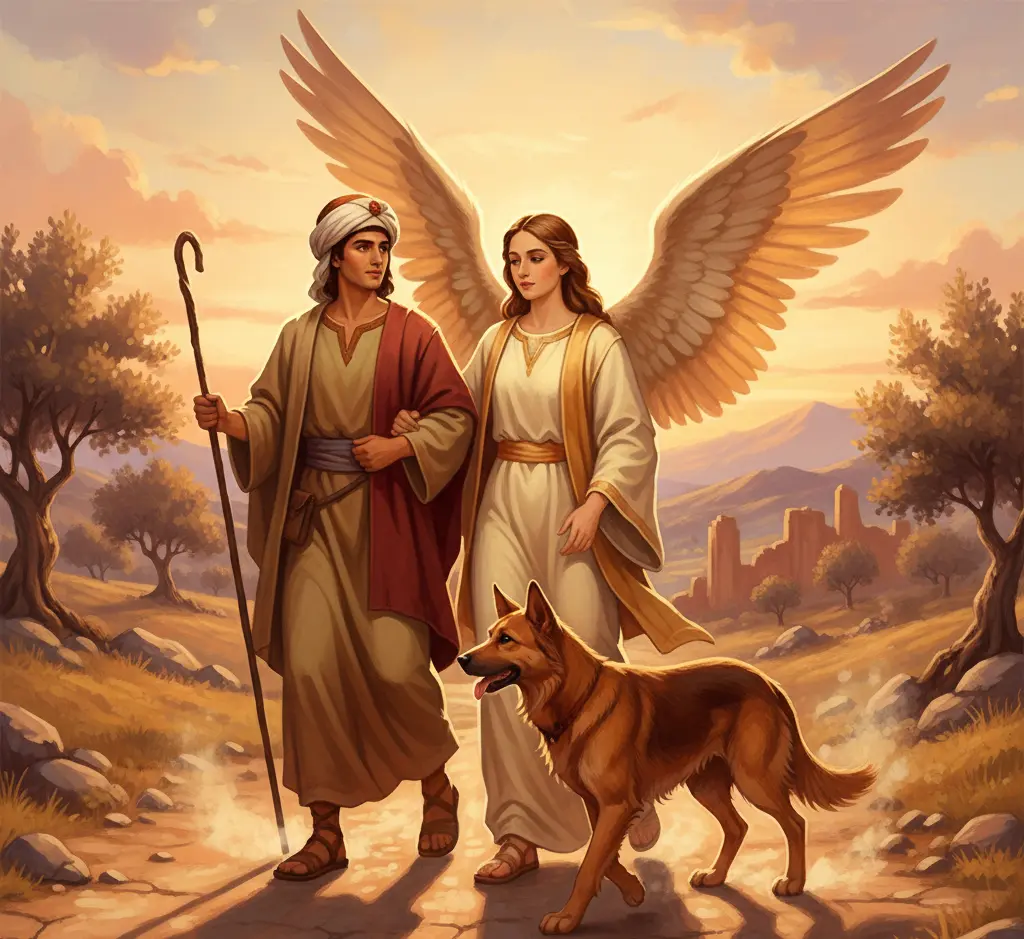
A Dog in Scripture
Open almost any Bible and you'll find dogs mentioned - but rarely in a positive light. In ancient Near Eastern culture, dogs were scavengers, street animals, creatures associated with impurity and danger.
But there's one remarkable exception: Tobit's dog.
Hidden in a book that most Protestants have never read, there's a brief but beautiful mention of a companion dog who travels with his master on a dangerous journey. It's the only time in all of biblical and apocryphal literature that we encounter what we would recognize as a pet - a dog who belongs to a family, travels with them, and is simply part of their life.
If you've ever wondered whether the people of faith in biblical times had pets, whether they valued animal companionship, or whether loving a dog is somehow "biblical," this ancient story offers a surprising answer.
The Book of Tobit: An Overview
The Book of Tobit is part of the Deuterocanonical books (included in Catholic and Orthodox Bibles) or the Apocrypha (recognized by Protestants as valuable but not Scripture). Written in the 2nd century BC, it tells the story of a righteous Jewish man named Tobit living in exile in Nineveh.
The book is actually a beautiful story of answered prayer, divine providence, and faithful obedience. But for our purposes, what matters most is a small detail that appears twice in the narrative - a detail so unusual that scholars have debated its meaning for centuries.
The Dog Appears
In Tobit 6:1-2, we read about Tobit's son Tobias setting out on a journey with the angel Raphael (who appears in human form):
"The young man went out and the angel went with him; and the dog came out with him and went along with them. So they both journeyed along, and when the first night overtook them they camped by the Tigris river."
That's it. No explanation. No introduction. Just: "and the dog came out with him."
Later, when Tobias returns home, the dog reappears:
"Then the dog went along behind them." (Tobit 11:4)
Two brief mentions. A dog who simply accompanies the travelers. No miraculous deeds, no symbolic significance explained - just a dog doing what dogs do: going along with his people.
Why This Matters
It's the Only Positive Dog Reference in Jewish Scripture
In the Hebrew Bible, dogs are consistently portrayed negatively:
-
Used as insults (1 Samuel 17:43, 2 Kings 8:13)
-
Associated with scavenging (1 Kings 14:11, 21:19)
-
Symbols of enemies (Psalm 22:16)
-
Connected to impurity and danger
But Tobit's dog? No negative associations. No explanation needed. Just a dog who belongs with the family.
According to scholar Joshua Schwartz, Tobit is "the earliest Jewish source to relate to the dog as a companion or almost as a pet." This represents a significant shift in how dogs were viewed.
It Shows Pets Were Part of Ancient Faith Communities
Some Christians wonder if having pets is somehow frivolous or unbiblical. After all, the Bible focuses on weightier matters - salvation, justice, love of neighbor.
But here, in a book that's fundamentally about faithfulness to God, answered prayer, and divine providence, a family dog simply appears. He's not central to the plot. He's just... there. Part of the family. Part of the journey.
This suggests that even in ancient times, among devout Jewish families, companion animals were a normal part of life - so normal they didn't require explanation or justification.
The Dog Might Represent Divine Providence
Some scholars suggest the dog's presence is symbolic. The dog appears exactly when Tobit prays for God to send an angel to accompany his son on a dangerous journey. Two verses later, both the angel and the dog appear.
Could the dog be an answer to prayer? A sign of God's protection? Some even speculate the dog might be another angel in disguise.
We can't know for certain, but it's fascinating that in a story about God's hidden providence - where an angel disguises himself as a human guide - the dog appears unexplained and accompanies them on their journey of divine protection.
What Ancient Readers Thought
The presence of this dog puzzled ancient readers. Some manuscripts tried to explain it by adding "his dog" or "the young man's dog" to clarify ownership. The translators clearly felt the sudden appearance needed explanation.
But other manuscripts preserve the text as it stands: the dog just shows up, travels with them, and goes home with them. No fanfare. No explanation.
This very puzzlement tells us something important: even in ancient times, having a companion dog was unusual enough to raise questions, but not so unusual that it needed to be edited out of a sacred text.
The Dog in Christian Tradition
Throughout church history, Tobit's dog has captured imaginations:
In Art:
The dog appears in countless artistic depictions of Tobias's journey. Medieval and Renaissance artists consistently included the faithful dog walking alongside Tobias and Raphael. The dog became an iconic part of the story's visual tradition.
In Literature:
Writers have referenced "Tobit's dog" as a symbol of faithful companionship. The dog even appears in Walter Scott's Waverley and Robert Browning's The Ring and the Book.
In Devotion:
Some suggest the traditional name "Toby" for dogs comes from Tobias and his faithful companion.
What This Means for Pet Owners Today
Your Pet Has Biblical Precedent
When you love your dog, when you include them in your family, when you feel grief at their loss - you're not doing something unbiblical or silly. You're actually following in the footsteps of ancient people of faith who also valued animal companionship.
Tobit's family was devout. They prayed. They followed God's laws. They trusted in divine providence. And they also had a dog who traveled with them.
These things weren't contradictory. Faith and pet ownership coexisted naturally.
Companion Animals Are Part of God's Good Creation
Genesis 1:25 tells us God created animals and called them good. Tobit's dog reminds us that the "goodness" of God's creatures includes their capacity to be companions, to walk alongside us through life's journeys, to be part of our families.
The dog in Tobit doesn't perform miracles or speak prophetic words. He just goes along. And somehow, that's enough to be included in the story.
Your pet doesn't need to do anything extraordinary to be valuable. Their companionship, loyalty, and presence are gifts from God.
The Bond is Ancient and Honorable
Sometimes people feel embarrassed by how much they love their pets. They worry it's excessive or misplaced affection.
But Tobit's dog traveled on a dangerous journey that would take months. The family let their dog accompany their son into unknown territory. They clearly valued this animal enough to include him in their plans, to care for him on the road, to bring him home again.
The human-animal bond you feel with your pet? It's not a modern weakness. It's an ancient pattern, found even in the sacred literature of God's people.
The Larger Biblical Context
While Tobit's dog is unique, the Bible contains other hints that animals matter to God:
God's Covenant Includes Animals:
After the flood, God makes His covenant with Noah, his descendants, and "every living creature" (Genesis 9:9-10).
God Cares for Animals:
Jonah 4:11 shows God's concern extends to animals. Matthew 10:29 says not a sparrow falls without God's knowledge.
The Restored World Includes Animals:
Isaiah 11:6-9 and Isaiah 65:25 describe the peaceful kingdom with animals prominently featured.
Righteous People Care for Animals:
Proverbs 12:10 says "The righteous care for the needs of their animals."
Tobit's dog fits into this larger biblical picture: a God who creates animals, cares for them, includes them in His covenants, and expects His people to treat them well.
Questions This Raises
Did Tobit's Dog Go to Heaven?
The text doesn't say. But the dog's presence in a book about God's providence, answered prayer, and ultimate restoration is intriguing.
If this simple, faithful companion was worth including in a story about God's hidden work in the world, might God also value such creatures in eternity? The text doesn't answer, but it certainly invites the question.
Why Don't We Hear About This More?
Because Tobit isn't in Protestant Bibles, many Christians have never encountered this story. It's a shame, because it offers a beautiful, positive depiction of pet companionship in an ancient faith context.
For Catholics and Orthodox Christians, Tobit is part of their biblical canon. For Protestants, even though it's not Scripture, it's still valuable historical and spiritual literature that offers insight into how ancient Jewish communities lived and thought.
What Should We Call This Dog?
The text never names him. Artists and writers have given him various names, but the Bible itself is silent.
Maybe that's fitting. He represents every faithful dog, every beloved companion, every animal who walks alongside us through life's journeys. He doesn't need a name to be significant.
Honoring the Ancient Pattern
When you walk your dog, remember Tobias and his companion walking along the Tigris River.
When your dog faithfully waits for you to come home, remember the dog who journeyed with Tobias and then "went along behind them" on the return.
When you grieve the loss of a pet, remember that the bond you feel is ancient - old enough to be mentioned (however briefly) in sacred literature.
When someone questions whether it's "biblical" to love a pet, you can point to Tobit and say: the people of God have been walking with their dogs for thousands of years.
The Quiet Significance
Tobit's dog doesn't rescue anyone. He doesn't deliver messages or fight demons. He's not the hero of the story.
He simply goes along. He's present. He's faithful. He accompanies.
And somehow, that was significant enough to be preserved in ancient literature, translated through the centuries, depicted in countless works of art, and remembered by faithful people for over two thousand years.
Your dog, your cat, your beloved pet - they too are simply present, faithful, accompanying you through your life's journey. That's their gift. That's their purpose. That's enough.
And in a book that's ultimately about God's providence and care, the presence of one faithful dog reminds us: God's care extends to all His creatures, and the bonds we form with them are good, ancient, and honorable.
A Prayer for Pet Owners
Lord, thank You for the gift of animal companionship. Thank You that even in ancient times, Your faithful people walked with their beloved animals. Thank You for my pet, who accompanies me through life's journey just as Tobit's dog accompanied Tobias. Help me to be a faithful steward of the creature You've entrusted to my care. And when the time comes to say goodbye, comfort me with the knowledge that You see, You care, and You understand. In Christ's name, Amen.
"The righteous care for the needs of their animals, but the kindest acts of the wicked are cruel." - Proverbs 12:10
Comments
No account needed—leave your name, email, and comment below.